I've been a YouTube pianist for a long time. So long, in fact, that a sizable portion of my YouTube audience today was probably born after I started my channel.
For the almost 30 years that I've been playing the piano, I thought it was supposed to feel like a finger stretching exercise. Every time after a rigorous practice session, I would have to shake off my hands in pain. I assumed that was just part of the deal. You love music, so you accept the discomfort.
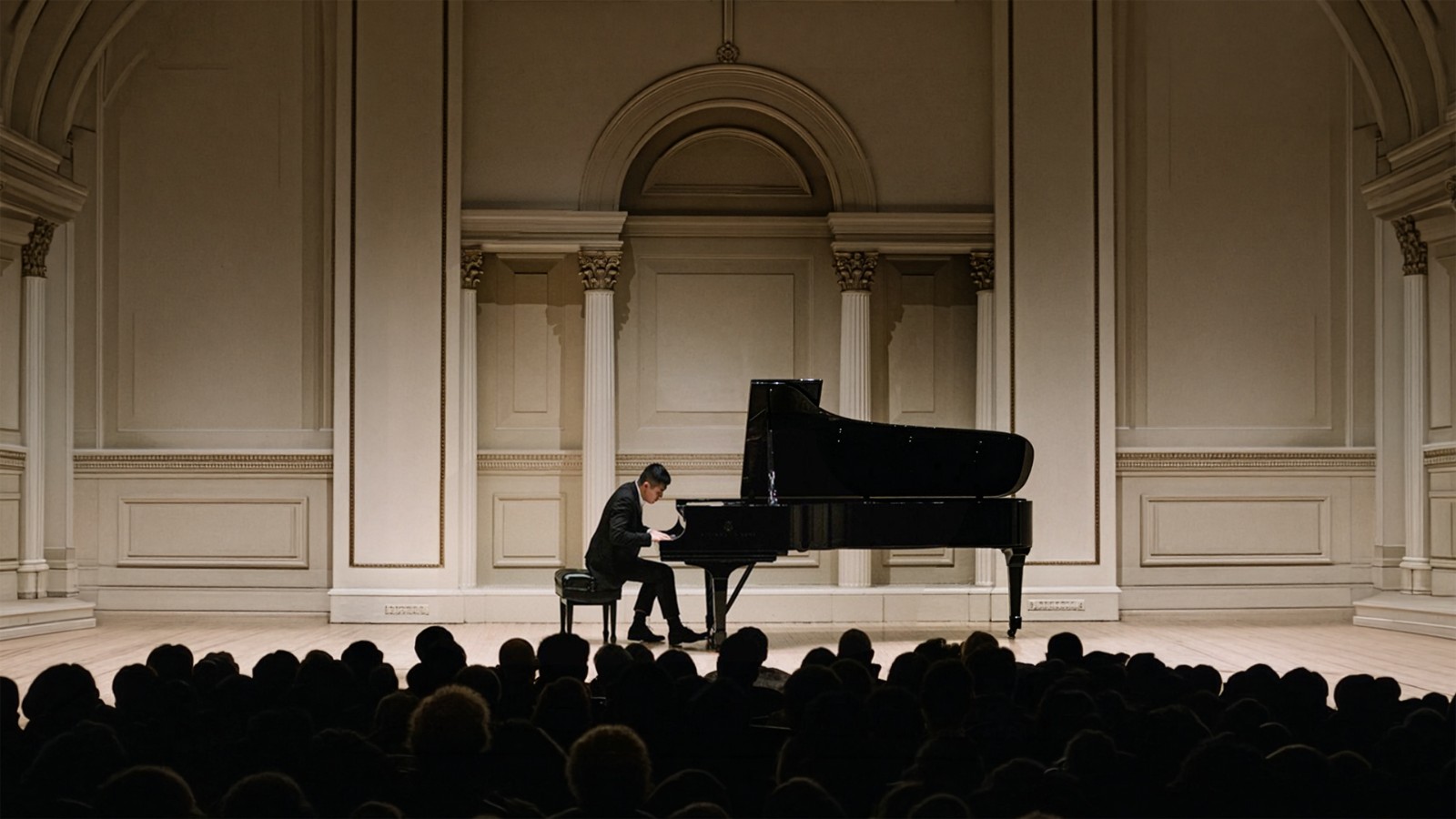
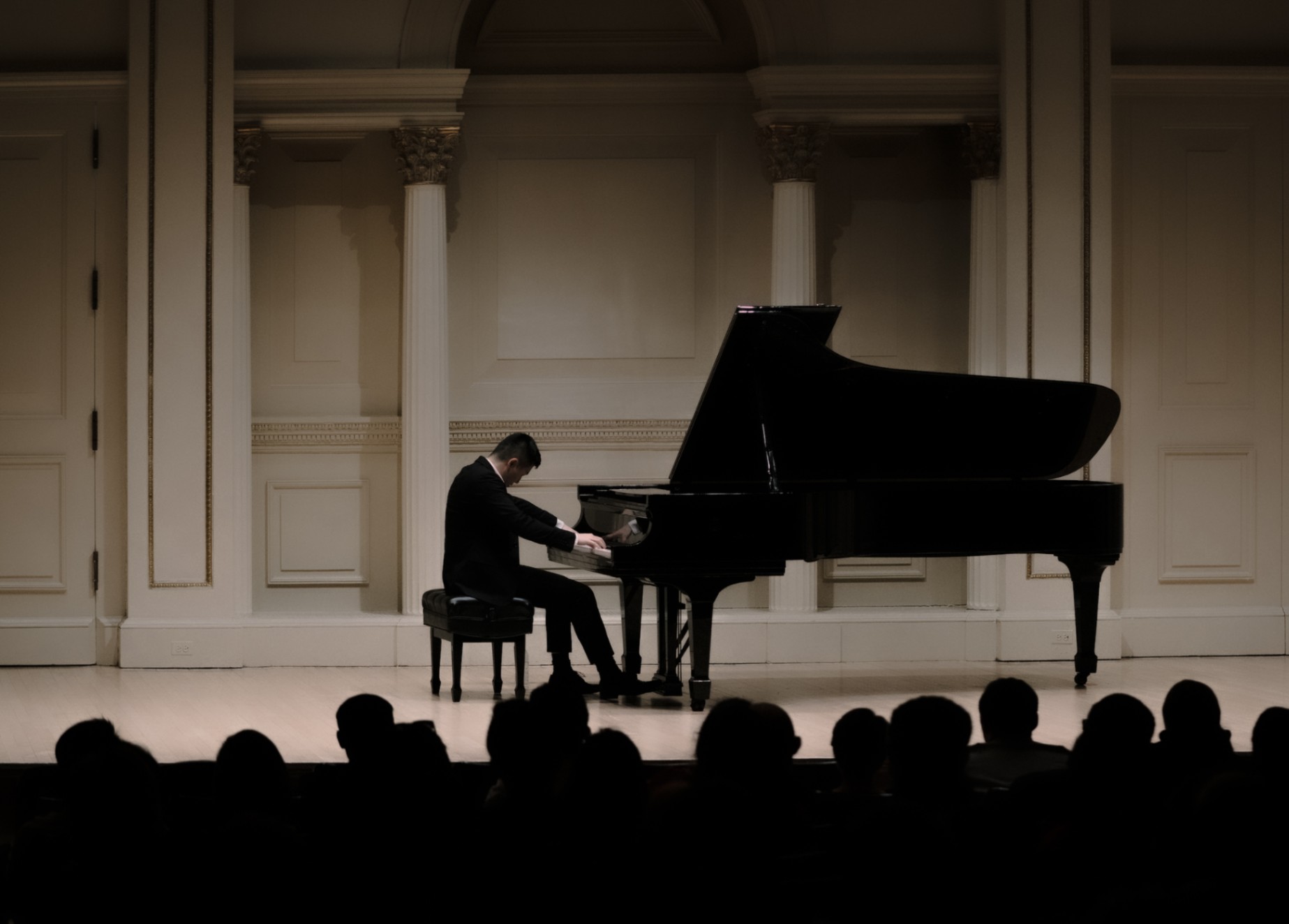
When I performed at world-famous concert halls such as Carnegie Hall and The Kennedy Center, I often had to ignore the strain in my fingers in order to produce the emotions that my music wanted to express. The audience heard beauty. My hands felt agony. And I thought that was normal.
I never questioned it. None of my teachers questioned it. The entire classical music world seemed to accept that pain was simply the price of admission for serious pianists. But here's what nobody told me: the problem was never my technique, my dedication, or my talent. The problem was the instrument itself.
The Turning Point
A $10,000 Experiment That Changed My Life
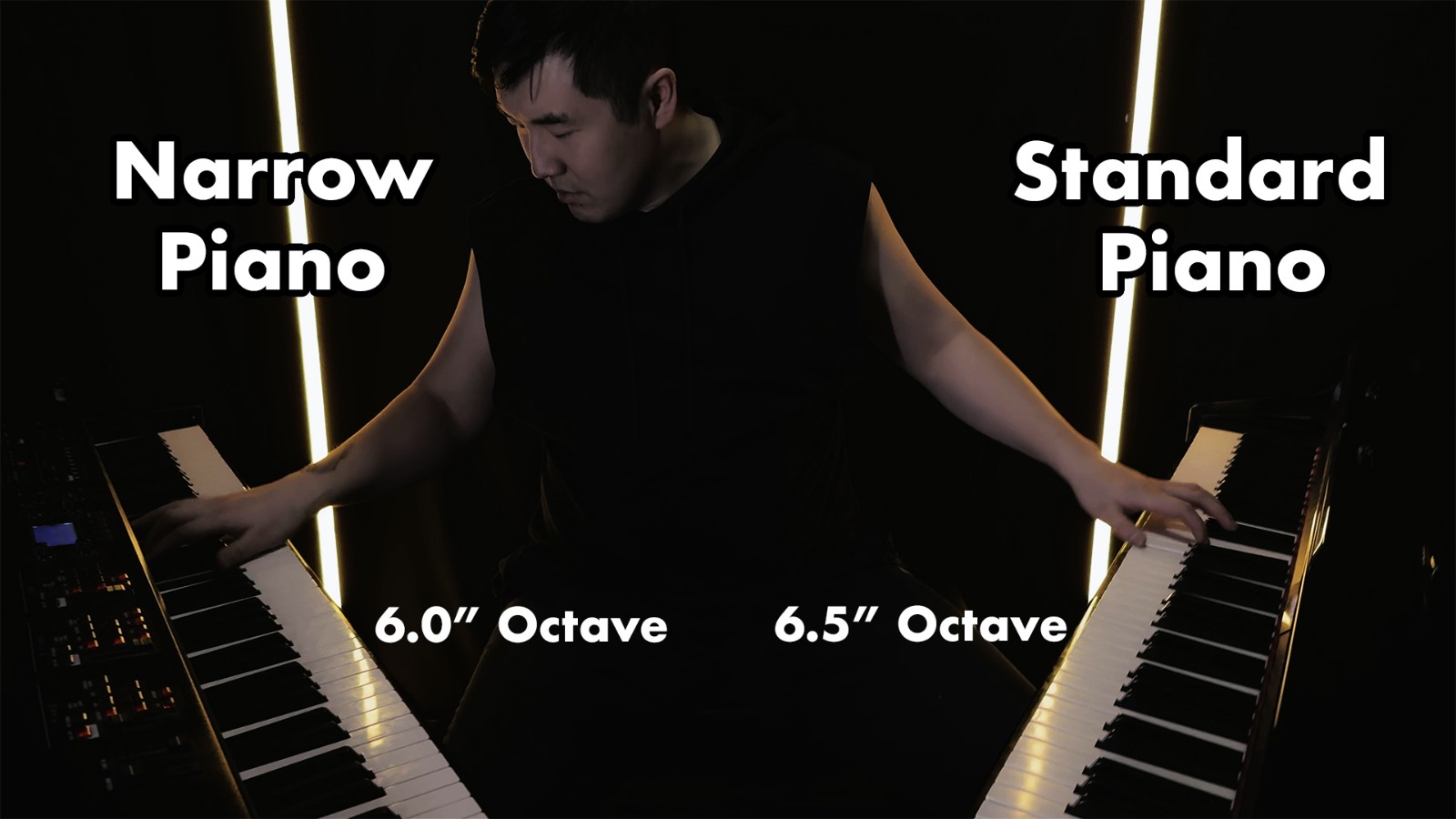
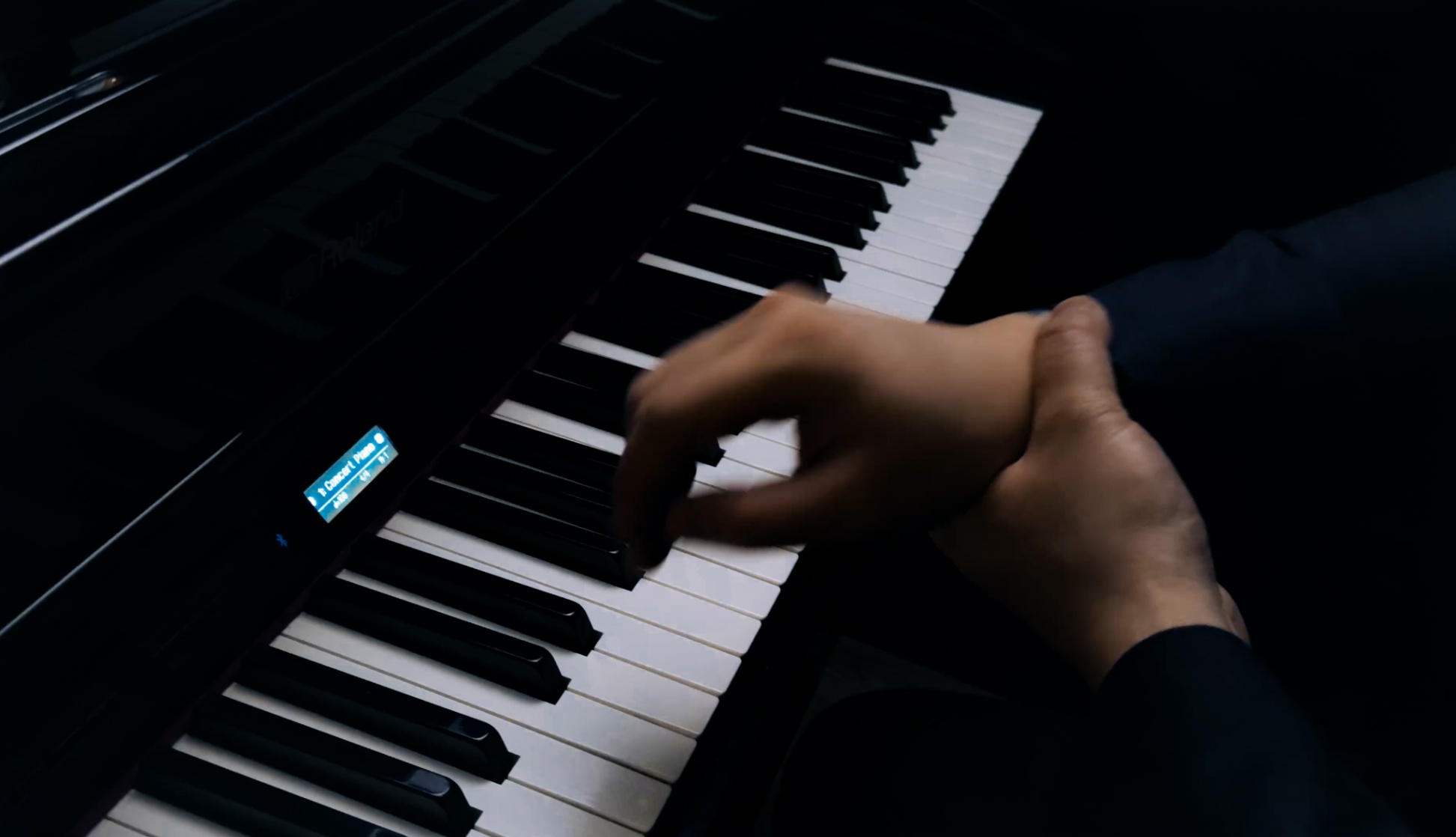
In 2022, I went to David Steinbuhler, the engineer behind the DS Standard Foundation, and commissioned a Kawai MP11SE with a DS6.0 keyboard size for $10,000. For the past three years, I've been practicing on what is possibly the only DS6.0 digital keyboard in North America.
"It completely changed my view towards what a piano should feel like. For the first time in nearly three decades, I played without pain."
Lionel Yu, DreamPlay FounderThe DS6.0 keyboard features a 6.0-inch octave instead of the conventional 6.5-inch octave. That half-inch difference might sound trivial. But when you multiply it across 88 keys and thousands of hours of practice, it is the difference between a career defined by pain and one defined by music. Every chord that once required a desperate stretch now fell naturally under my fingers. Passages I had struggled with for years suddenly felt fluid, relaxed, almost easy.
I started digging into the research. And what I found was staggering. The pain I had accepted as "normal" for 30 years was not normal at all. It was the predictable, preventable consequence of playing an instrument that was never designed for my hands.
The Research
The Hidden Crisis Nobody Talks About
Here is a fact that should shock every pianist, teacher, and parent: the modern piano keyboard was not designed through careful ergonomic study. It is an arbitrary historical artifact from the 1880s, standardized during an era when the concert stage was dominated almost exclusively by large-framed European men.
Before the 1880s, keyboard sizes varied significantly across regions and manufacturers. The instruments played by Mozart, Haydn, Bach, and Scarlatti featured much narrower keys, shallower key dips, and significantly lighter action. As piano manufacturers sought to increase volume and projection for larger Romantic-era concert halls, the keys became longer, heavier, and wider. By the late 1880s, the keyboard was rigidly standardized at a 6.5-inch octave width.
The composers who defined the most technically demanding piano repertoire, figures like Franz Liszt and Sergei Rachmaninoff, possessed exceptionally large hands. Rachmaninoff could play a twelfth. They wrote music that fully utilized their unique anatomical advantages, embedding gargantuan intervals and dense chordal voicings into the foundational canon of advanced piano literature.
Historical Footnote
The Josef Hofmann Exception
The legendary pianist Josef Hofmann, a close friend of Rachmaninoff and the dedicatee of Rachmaninoff's notoriously difficult Third Piano Concerto, openly refused to perform the piece publicly due to the limitations of his smaller hand span. Leveraging his immense fame, Hofmann demanded that Steinway & Sons build him a custom 7-foot instrument featuring a narrower keyboard with a 6.3-inch octave.
Manufacturers have long possessed the capability to alter keyboard dimensions. But this practice was kept quiet in a classical music industry that is notoriously slow to embrace systemic change.
Today's pianists face a deeply paradoxical situation. They are tasked with executing technically demanding music that was composed on narrower historical keyboards (in the case of Classical works) or by anatomical outliers (in the case of Late-Romantic works), all while using a modern keyboard that is significantly wider and inherently favors an anatomical profile possessed by a distinct minority of the global population.
The Data
The Numbers Don't Lie
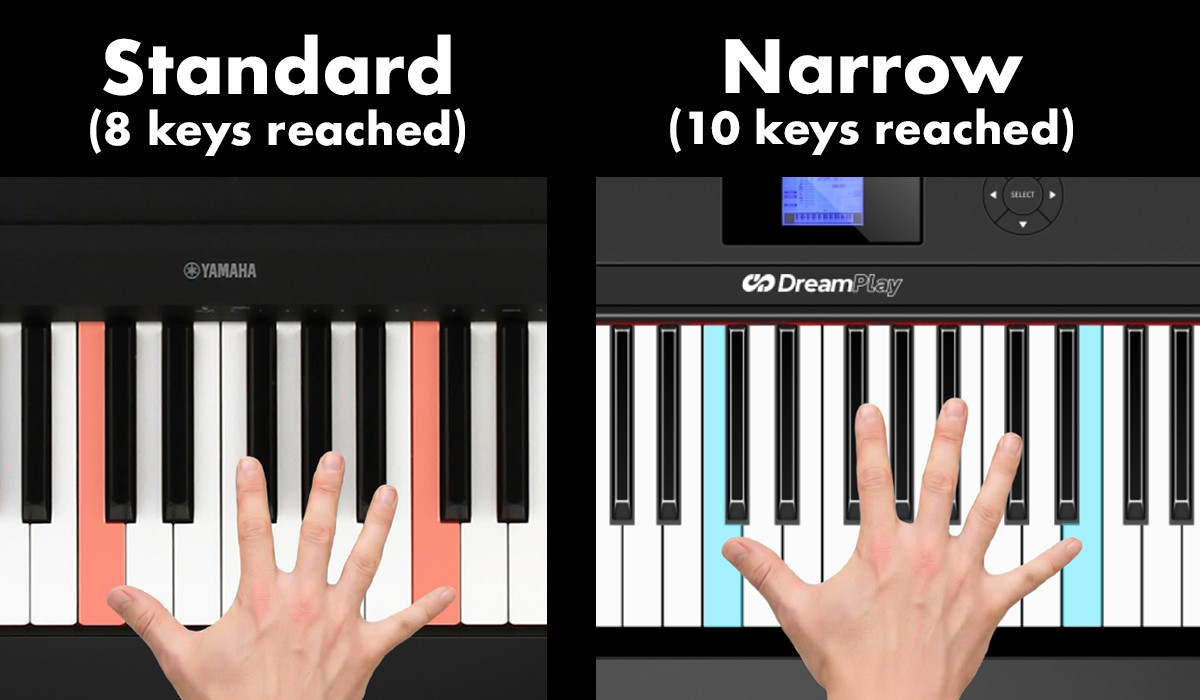
Biomechanical research indicates that a minimum active hand span of 8.5 inches (thumb to fifth finger) is required to navigate the conventional 6.5-inch octave keyboard comfortably, without relying on dangerous, repetitive hyperabduction. When you apply that threshold to the general population, the scale of the exclusion becomes impossible to ignore.
Let that sink in. Nearly nine out of every ten female pianists are dedicating their careers to an instrument that is biologically too large for them. And while a 5-year-old violinist plays a 1/10 or 1/8 size violin and graduates through multiple sizes as they grow, the 5-year-old piano student is tasked with manipulating an instrument sized for an adult male.
| Keyboard Standard | Octave Width | Best Suited For |
|---|---|---|
| DS6.5 (Conventional) | 6.5 inches | Large hands only (span > 8.5"). Causes strain for the majority. |
| DS6.0 (Universal) | 6.0 inches | Preferred by most men. Highly accessible for the average female hand. |
| DS5.5 (7/8) | 5.5 inches | Eliminates the male hand-size advantage. Ideal for women, children, and injury recovery. |
The Medical Evidence
This Isn't About Comfort. It's About Injury Prevention.
When a pianist with a span smaller than 8.5 inches attempts to play octaves or large chords on a standard keyboard, they are forced completely out of the "anatomically neutral" position. Reaching an octave requires maximum hyperabduction of the thumb and fifth finger. The fingers splay flat, destroying the supportive arch of the hand. Without that arch, the pianist bears down with inappropriate compensatory muscle groups, leading directly to tendonitis, tenosynovitis, focal dystonia, and carpal tunnel syndrome.
The peer-reviewed research is overwhelming:
Dr. Naotaka Sakai's clinical studies (1992, 2002) of 200 Japanese pianists confirmed that the hyperabduction required to play octaves and chords on a modern keyboard was the central culprit in reported injuries. He noted that many technically demanding pieces were composed for narrower historical keyboards, creating a "paradoxical situation" where modern pianists destroy their hands attempting these techniques on wider instruments.
Yoshimura and Chesky at the University of North Texas (2006, 2008) found that 86% of piano majors and 91% of piano teachers reported experiencing active pain while playing. By analyzing a dataset of nearly 400 subjects, both studies established a statistically significant negative correlation between hand span and pain. The smaller the hand, the higher the incidence and severity of the pain.
Dr. Brenda Wristen's EMG pilot study (2006) at the University of Nebraska-Lincoln used surface electromyography to capture empirical data on muscle activity and joint angles. Small-handed pianists transitioning to a 7/8 (DS5.5) keyboard showed a drastic reduction in muscle fatigue and stress levels, with all participants strongly preferring the narrower keyboard based on overall comfort.
And most recently, Stanford University's School of Engineering (2024) developed an AI-trained model using the first large-scale 3D hand motion dataset from 15 elite pianists. Elizabeth Schumann, Director of Keyboard Studies at Stanford and a co-author of the study, stated:
"We would never expect a world-class athlete to compete with equipment that does not fit their body. Yet we ask pianists, particularly women, to adapt to a one-size-fits-all design that was never built with them in mind."
Elizabeth Schumann, Director of Keyboard Studies, Stanford UniversityReal Stories
"The Two Great Secrets" of Piano Playing
Christopher Donison, a Canadian pianist, composer, and former music director of the Shaw Festival, articulated the massive divide in the piano world by defining what he calls "two great secrets." The first secret is how extraordinarily easy the instrument is to play for those possessing large hands. The second secret is how utterly impossible it can be for those with smaller hands.
"All the touches and techniques in piano studies, and I stress ALL of them, were made easier by a factor of a hundred."
Christopher Donison, pianist and composer, on switching to narrow keysDr. Carol Leone, Chair of Keyboard Studies at Southern Methodist University (SMU) in Dallas, was the first major U.S. institution leader to formally integrate alternatively sized keyboards into a piano performance program, back in 2000. She has witnessed the transformation firsthand, hundreds of times:
"I often witness pianists place their hands for the first time on a keyboard that better suits their hand span. How often the pianist spontaneously bursts into tears. A lifetime of struggling with a seemingly insurmountable problem vanishes in the moment they realise, 'It's not me that is the problem; it is the instrument!'"
Dr. Carol Leone, Chair of Keyboard Studies, Southern Methodist University
The adaptation is remarkably fast. Dr. Leone's research shows that, on average, it takes a pianist merely 10 to 15 minutes to adjust to a DS6.0, and about 40 minutes to map their brain to a DS5.5. Once this initial neural mapping occurs, pianists can switch between sizes effortlessly, much like a professional string player switching between a violin and a viola.
Here are a few more voices from pianists who have experienced the difference:
"I haven't had a single injury, and I can practice as long as I want."
Eliana Yi, piano student at SMU, after switching from a standard keyboard that caused injury during a Chopin concerto
"I was really frustrated when I first started this research because I was telling people how unfair it was to not have smaller keyboards available to students, and the reaction I heard most was people saying 'you don't need that, you just need to fix your technique.'"
Abigail Terrill, researcher at CU Boulder, whose thesis demonstrated rapid adaptation to narrow keyboards
"In my 25 years as a professor, I have seen the number of students with injuries rise exponentially. I do believe that if we had smaller keyboards as a standard thing, that would not be an issue."
Jennifer Hayghe, Associate Professor of Piano, University of Colorado Boulder
Why DreamPlay Exists
I Built This Because I Couldn't Watch It Happen Anymore
Many of my students are kids or women, and their hands are small. It really hurt me to see them get discouraged playing on a full-sized keyboard, when I myself was able to practice on a DS6.0 keyboard and knew firsthand how transformative it was.
I watched talented students abandon pieces they loved. I watched them develop pain in their wrists and forearms. I watched the joy drain from their faces as they struggled with passages that were physically impossible for their hand size, not because they lacked talent or dedication, but because the instrument was simply too large.
That's why I started DreamPlay. So that every pianist can experience what playing should actually feel like: comfortable, natural, and free from pain. And at a price that doesn't require a $10,000 custom commission.
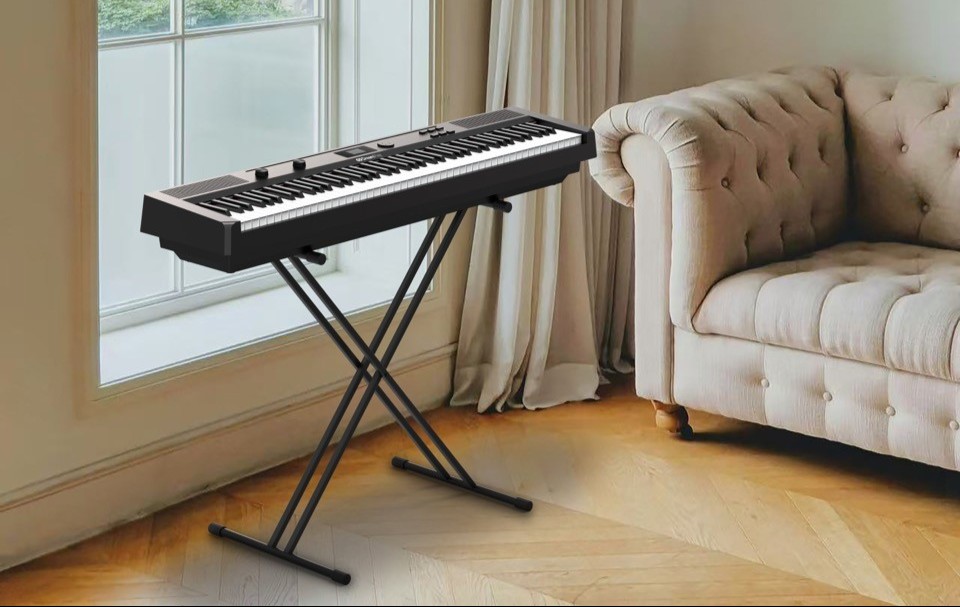
The DreamPlay One is a professional-grade digital piano available in both DS5.5 and DS6.0 sizes. It is designed for the 87% of women, the 24% of men, and the 100% of children who have been forced to play on an instrument that was never built for them. It is the instrument I wish I had when I was six years old.
The transition to a multi-standard keyboard world does not threaten the grand tradition of piano playing. It democratizes it. By abandoning the "one-size-fits-all" fallacy and embracing ergonomic equity, we can eliminate entirely preventable injuries and allow millions of pianists to finally realize their true artistic potential.
It is time for the focus of piano to finally shift from the physical survival of the instrument to the joyful mastery of the music.
Find the Size That Fits Your Hands
Measure your hand span, match it to a DS size, and see what is available on our site.
See Your OptionsJoin the movement for ergonomic keyboards.