Hand Pain
Why Your Hands Hurt After Piano Practice (and What to Check)
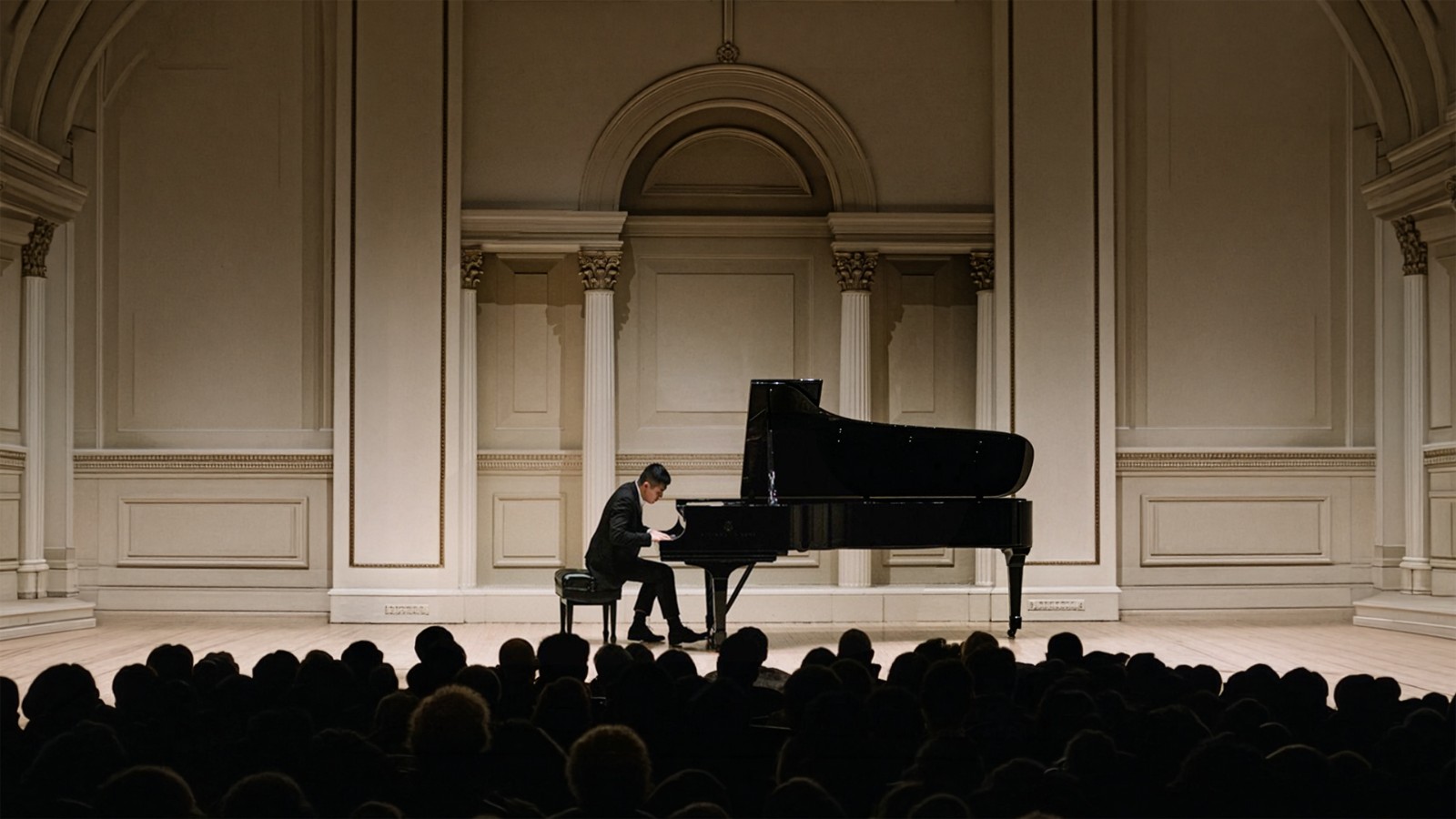
For almost 30 years I shook out my hands after every serious practice session and thought that was normal. When I played at Carnegie Hall and The Kennedy Center, I often had to ignore the strain in my fingers to get the music out. I figured pain was the price of loving the piano, and I never asked why.
I am a pianist and a teacher, not a doctor, so none of this is medical advice. If your pain is sharp, wakes you up, or is still there the next morning, stop playing and have a doctor or a hand therapist look at it. What I can do is explain what happens in a stretched hand and what to check at the keyboard.
What a stretched hand is doing
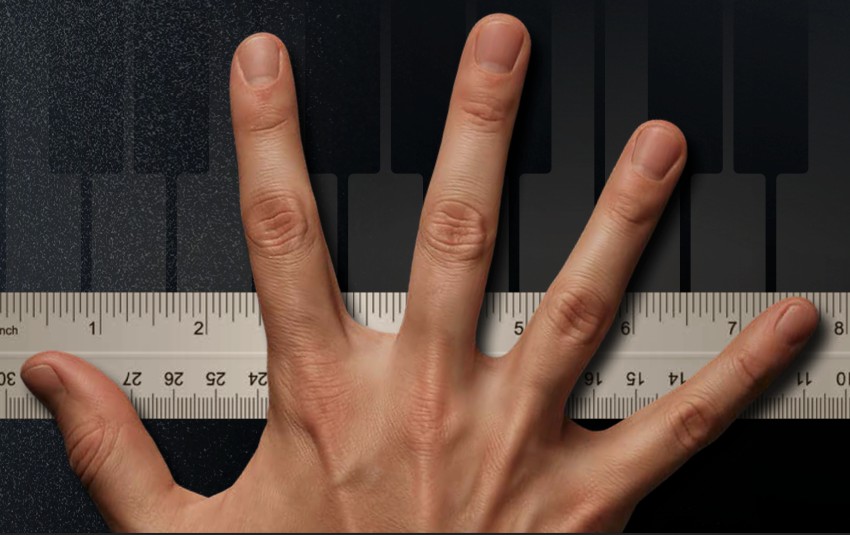
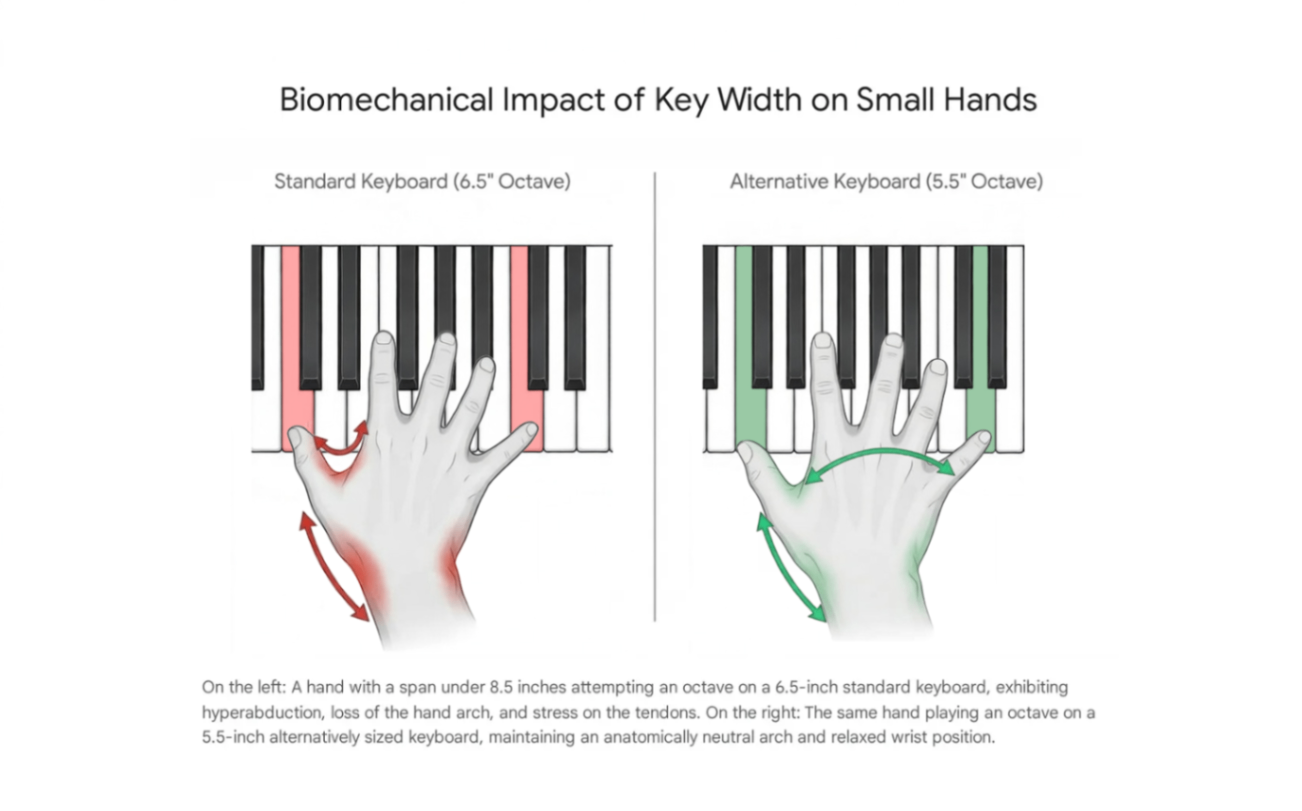
When a small hand plays an octave or a big chord on a standard keyboard, it gets pulled out of its natural shape. The fingers splay flat, the arch of the hand collapses, and the wrist bends sideways toward the little finger. The names for these are hyperabduction, which is the wide stretch, and ulnar deviation, which is the sideways bend of the wrist.
Do that thousands of times and the small muscles of the palm and the tendons of the wrist take the load. The research listed on our FAQ page ties that position to strain in the muscles of the palm and to pressure on the median nerve, the nerve behind carpal tunnel syndrome.
Five things to check at the keys
- Where your little finger lands on an octave. If it lands on the very edge of the key every time, your hand is reaching.
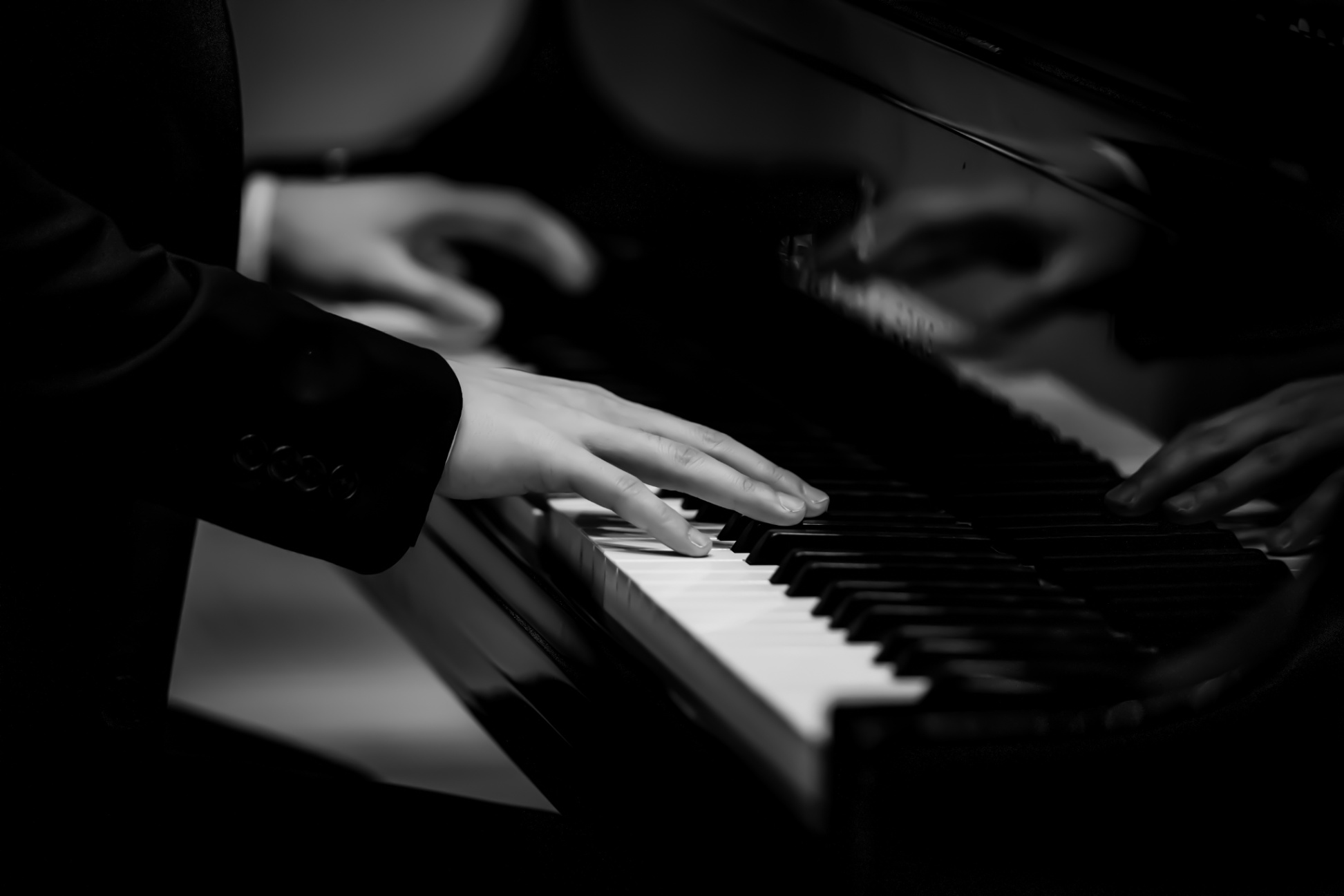
- Whether your fingers lie flat. A hand with room to work keeps a slight arch.
- Which way your wrist leans. If it tips toward your little finger on octaves and big chords, that is the ulnar deviation I mentioned above.
- Whether your shoulder and forearm tighten before a wide chord. Tension up the arm is a sign the hand is working harder than it should.
- Where the ache is and when it arrives. Write down the spot (the base of the thumb, the side of the wrist, the forearm) and how many minutes in it starts. A week of notes is useful to you and to anyone you show it to.
Is it your technique or the keyboard?
Sometimes it is technique, or the setup. A bench at the wrong height, two hours without a break, or a tight grip on the keys will make any hand ache, and those fixes are free, so try them first.
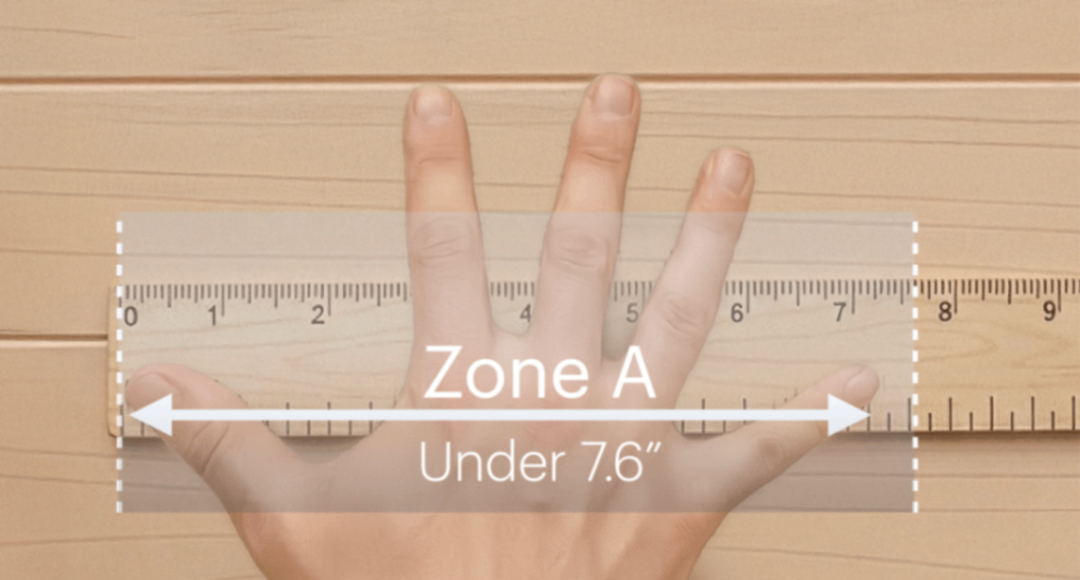
But if the ache shows up on octaves and wide chords and fades when you play something that sits comfortably inside your hand, look at the keys. A standard octave is 6.5 inches. PASK data says you need a span of about 8.5 inches to play it comfortably, and 87.1% of adult women and 23.8% of adult men are under that.
For me it was the keys. In 2022 David Steinbuhler of the DS Standard Foundation rebuilt my Kawai MP11SE with a DS6.0 keyboard, a 6.0 inch octave. For the first few weeks the black keys felt very narrow, and I had to be more accurate because there is less key to land on. Then something else took over. I did not have to strain for an octave, the most common interval in piano music, and my hand felt completely relaxed.
To be honest, narrow keys do not fix everything. They will not fix a bench that is too low or a three hour session with no breaks. They take away one cause, the stretch, and for me that was the main one.
Lionel
P.S. The numbers and the sources behind all of this are on our Hidden Barrier page, if you want to read the research yourself.
Read the research behind this post
The numbers, the biomechanics and the sources are on our Hidden Barrier page.