History
Why Are Piano Keys This Size? A Short History
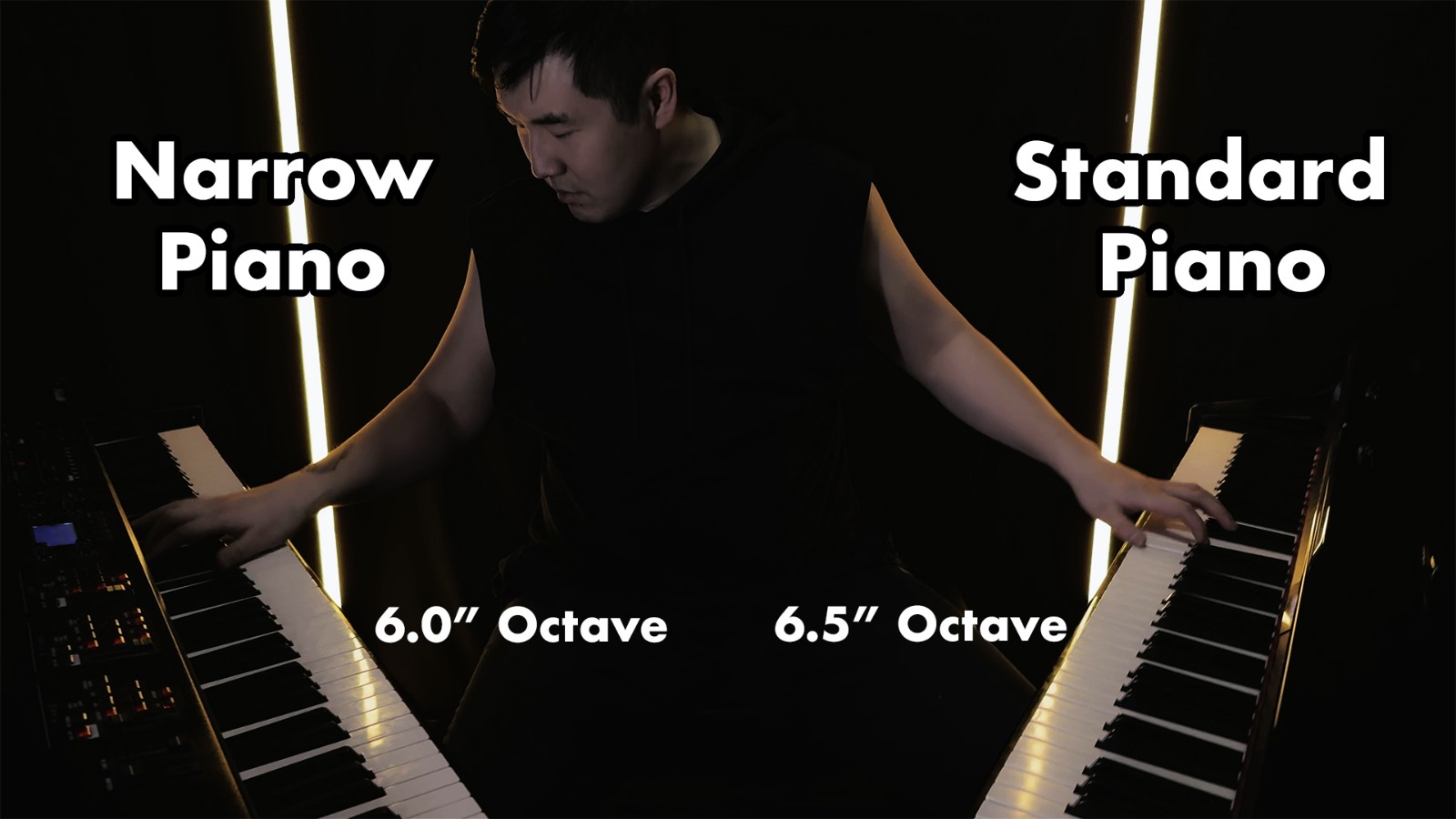
Standard piano keys feel like a fact of nature: a 6.5 inch octave, the same in every concert hall and every school. The size was settled in the late 1880s, and nobody settled it by studying hands.
Before 1880
Before the 1880s, keyboard sizes varied across regions and makers. Early fortepianos, harpsichords and clavichords often had much narrower keys, shallower key dips and a lighter action. Mozart, Haydn and Bach wrote for instruments like these, and their music is full of quick, light finger work that suits them.
Why the keys got wider
Through the 19th century, builders wanted louder pianos to fill the bigger concert halls going up across Europe. Cast iron frames made that possible, because they could hold much more string tension. More tension meant heavier strings and larger hammers, and moving a larger hammer takes leverage, so the keys became longer, heavier and wider. By the late 1880s the keyboard was fixed at a 6.5 inch octave, which is 16.5 centimeters.
Whose hands it was built around
That standardization happened in the world of the Romantic virtuoso, a tradition of touring pianists such as Liszt and Brahms, and later Rachmaninoff, who all had exceptionally large hands. Rachmaninoff could play a twelfth. Pianists like that wrote for their own hands, and the stretches they wrote are now part of the standard advanced repertoire.
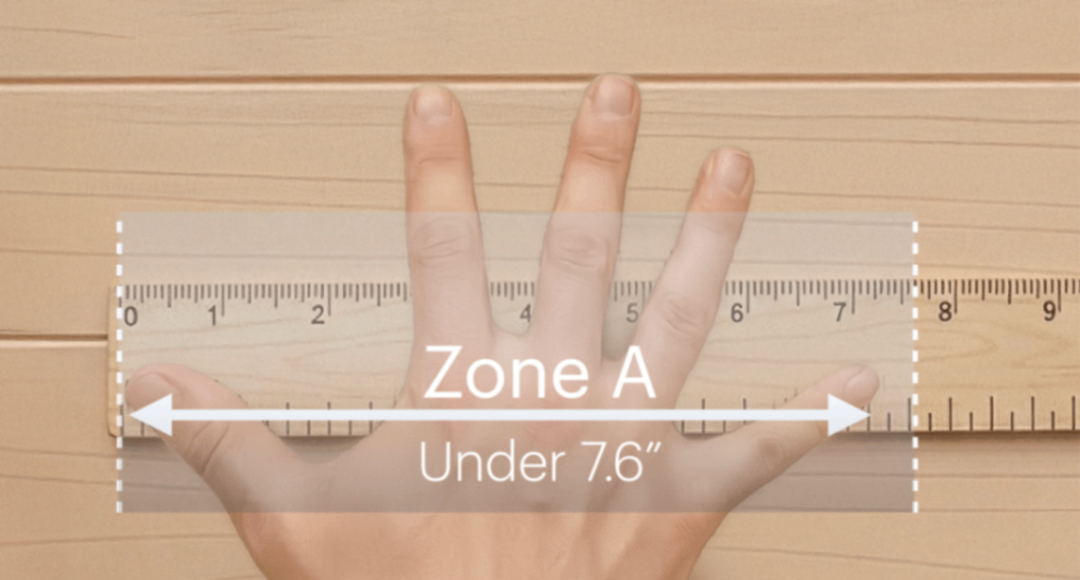
Today's hands get measured against that. Pianists for Alternatively Sized Keyboards says a hand needs a span of about 8.5 inches to play a 6.5 inch octave comfortably, and 87.1% of adult women and 23.8% of adult men are under that line.
That leaves a pianist today in an odd spot. The Classical repertoire was written for narrower keyboards, and the late Romantic repertoire was written by pianists with outsized hands. We play both on one keyboard, which is wider than the Classical composers knew and sized for hands that most of us do not have.
Why nobody changed it
Our FAQ calls it the Concert Hall Fallacy. Manufacturers set their dimensions by what the touring requirements of a small number of elite soloists called for, and the same page points out that about 90% of pianos are played in homes and studios. The industry is also conservative, and a standard that has lasted well over a hundred years does not get questioned often.
The Hofmann exception
Josef Hofmann was a close friend of Rachmaninoff and the dedicatee of his Third Piano Concerto, and he refused to perform it in public because of his smaller hand span. Using his fame, he asked Steinway & Sons to build him a custom 7 foot piano with a narrower keyboard, a 6.3 inch octave.
For a sense of scale, Hofmann's 6.3 inch octave was 0.2 inches narrower than a standard one. A DS6.0 octave is half an inch narrower, and a DS5.5 octave is about an inch narrower.
The modern standard
The modern version of the idea started with a chance meeting in 1991. David Steinbuhler, visiting the Shaw Festival, met its music director Christopher Donison, who had a custom 7/8 size keyboard installed in his grand piano. David played it and was amazed by how easily he adapted. Christopher explained how a whole new world had opened for him when he first got the keyboard. Combining Christopher's vision with David's engineering background, they created the Donison-Steinbuhler (DS) Standard.
Where that leaves us
A narrower keyboard is an old idea, and at first it belonged to people with enough influence to demand one. I think about Hofmann when someone tells me narrow keys are a gimmick. What is different now is that you do not have to be Hofmann to get a keyboard that fits, and that is the whole ask behind DreamPlay: 2 more sizes. That's it.
Lionel
P.S. The full timeline, with pictures, is on our page about the history of the keyboard: Historical Facts.
Read the full timeline
From keyboards before 1880 to the narrower Steinway built for Josef Hofmann, with pictures.