Narrow Keys
Will a Narrow Keyboard Ruin My Technique on a Standard Piano?
This is the question we hear most about narrow keys: if I practice on a narrow keyboard, will I still be able to play a normal piano?
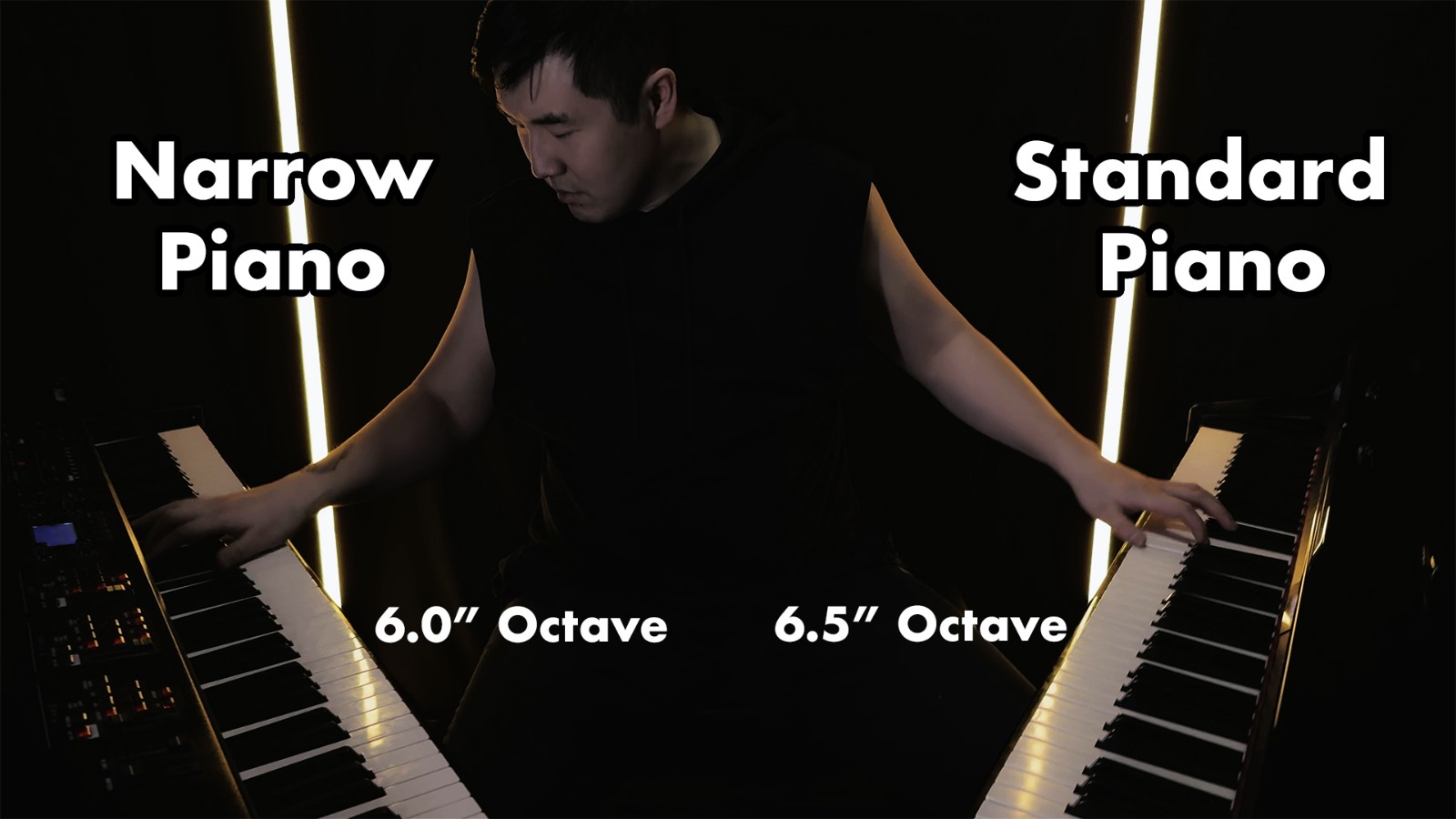
And to be honest, the answer starts with something that is somewhat true. You will develop a different technique on a narrower keyboard, because your hands and fingers will be more relaxed. Whether that is a problem depends on what you were doing on the wide one. If you were stretching and tensing for every octave, a technique with less of that is not something to worry about.
How long it takes to adjust
Dr. Carol Leone's research at SMU tracked students as they switched sizes and found that, on average, a pianist takes 10 to 15 minutes to adjust to a DS6.0 and about 40 minutes to map their hand to a DS5.5. After that, switching is closer to what a string player does between a violin and a viola than to learning a new instrument.
What happens when you go back
The worry is that narrow keys will make a standard piano feel impossible. Hubert Nuss, a professor of jazz piano at HMDK Stuttgart, described the opposite, after playing a 6.0 keyboard called SIRIUS:
"Another surprising effect for me was that playing this [SIRIUS 6.0] also has a positive effect when you go back to the normal keyboard."
Hubert Nuss, Professor of Jazz Piano, HMDK Stuttgart
The explanation on our FAQ is that practicing at a size that fits teaches your hand what playing without tension feels like, and that feeling comes back with you to the standard piano. I cannot promise it for every pianist, and nobody should.
What honestly changes
The black keys feel narrow at first. On a standard piano the black keys are wide enough that you can approximate the distance and still hit the note. On narrower keys your finger accuracy has to be better. That was my first few weeks on a DS6.0, and the feeling went away.
What about the concert hall?
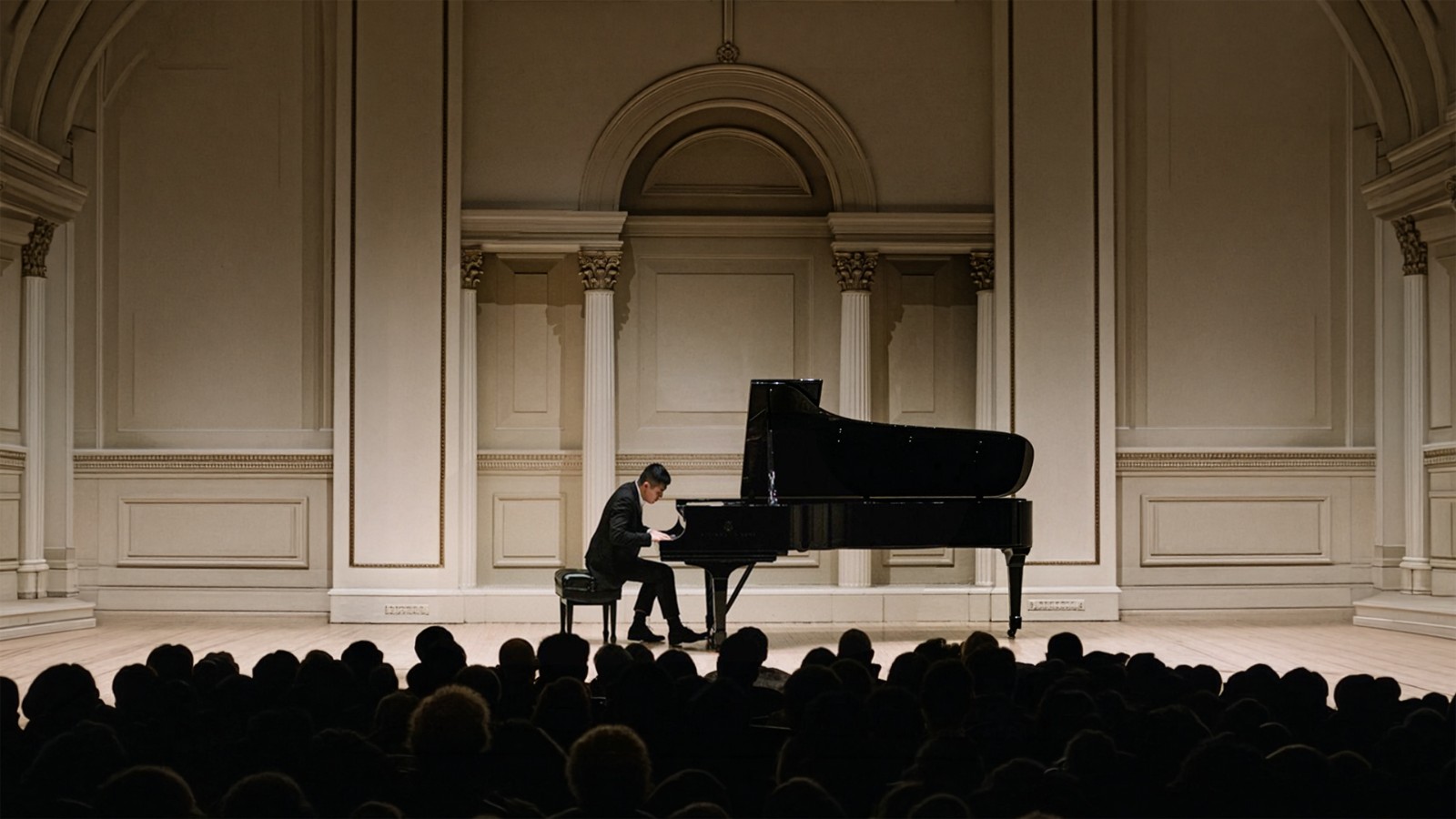
This is the question that matters most if you perform. Here's the truth: I really tried my absolute hardest to get a DS6.0 grand piano into the beautiful concert hall for my Belgium concert. What I want is a world where every concert hall has a DS5.5 and a DS6.0 action to put into their grand pianos. We are not there yet, but our DS Standard page says that SMU, the University of North Texas and others already use DS keyboards for teaching, and that international competitions are beginning to accept DS sizes.
Does it change how you read and memorize?
Our FAQ makes two claims worth testing for yourself. The first is that on keys that fall naturally under a smaller hand, you do not have to keep looking down to judge a big leap, and you can trust the feel of your hand in the air. The second is that memorizing gets easier, because a complex chord becomes something your hand grasps and not something it strains for. Treat both as things to try, not promises.
"Isn't that cheating?"
Some people call narrow keys cheating. Nobody accuses a pianist with big hands of cheating when a tenth falls under the hand without any effort on a standard keyboard. All we are asking for is 2 more sizes. That's it.
If you want to test it, give it an hour, not five minutes. The numbers above are 10 to 40 minutes to adjust, so an hour is enough to tell you what you think. Play a piece you know well on the narrow keys, then the same piece on a standard piano, and notice your shoulders, your wrists and your little fingers, not only the notes.
Lionel
P.S. The questions people ask us most, with sources, are on our FAQ.
Questions about narrow keys?
Our FAQ covers adjustment time, technique, pain and sizes, with sources.