"The DS 6.0 Was Truly Life-Changing for Me."
Then I discovered what a piano should feel like.
When most people think about pianos, they picture a single, universal instrument: one size, one standard. But for the roughly 50% of pianists whose hands fall below the average span, that "standard" can be a source of chronic pain, limited repertoire, and in some cases, career-ending injury.
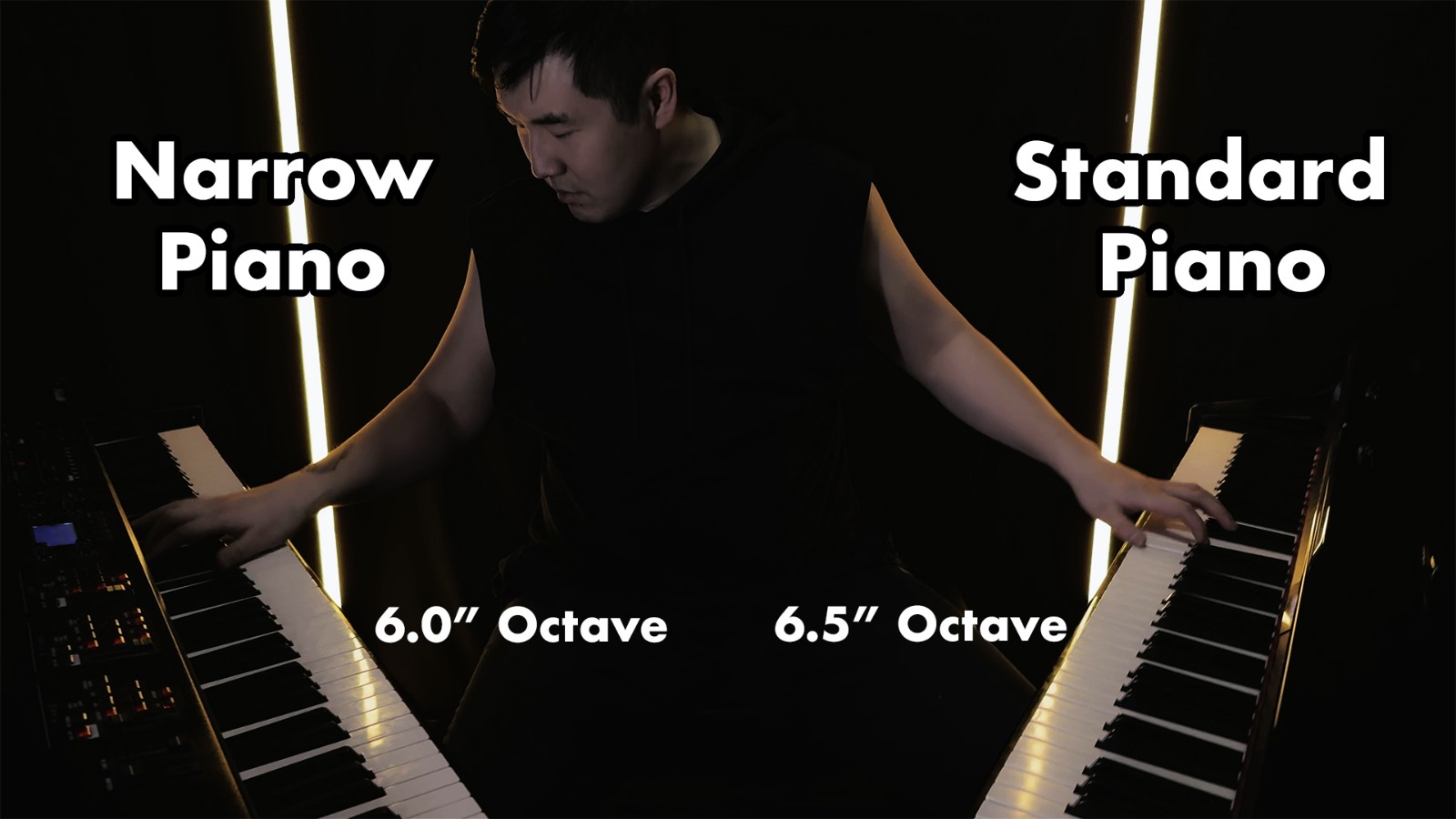
Claudia is one of those pianists. A classical pianist pursuing her Master's degree at Southern Methodist University (SMU) in Dallas, Texas, Claudia developed tendonitis and a ganglion cyst from years of overstretching on a standard-sized keyboard, ultimately requiring surgery on her wrist. It wasn't until she discovered the DS 6.0 piano, a keyboard with slightly narrower keys designed for smaller hands, that her relationship with the instrument fundamentally changed.
In this interview, Claudia sat down with Lionel Yu, founder of DreamPlay Pianos, to share her journey, from injury to recovery, from limitation to liberation, and why she believes alternative-sized keyboards should be available to every pianist.
Claudia
Classical pianist, Master's student at SMU. Hand span: ~7.2 inches. Plays on a DS 6.0 grand piano under the mentorship of Dr. Leone.
Lionel Yu
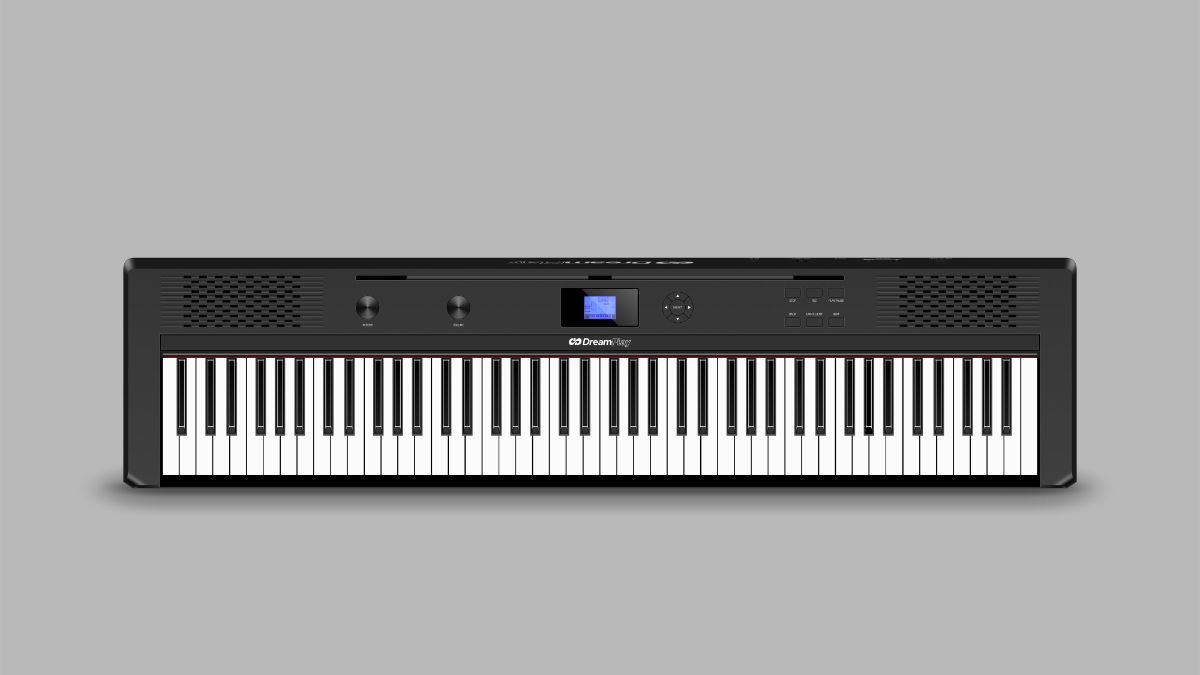
Founder of DreamPlay Pianos. Pianist with 30 years of experience. Hand span: 8.0 inches. Building affordable DS 6.0 and DS 5.5 keyboards.
Discovering the DS 6.0
What was your initial reaction when you first found out there was a DS 6.0 grand piano at your college? Did you know about it before enrolling, or did you discover it after?
I actually didn't know until I came here to study with Dr. Leone. So I was very lucky because I have very, very small hands and I actually got injured first. I got tendonitis because I was overstretching and playing octaves, a lot of big, stretchy chords. I got a ganglion cyst because of the tendonitis, so I had to basically have it surgically removed. I did surgery on my wrist. It was a really bad injury.
So I was very lucky that I had access to the 6.0. Dr. Leone, after I told her about my injury, showed me everything about this keyboard and I was basically playing everything on the 6.0 since.
First Time Playing the DS 6.0
What happened when you first touched the DS 6.0? What was your initial reaction, and how did that eventually evolve into an overall altered view towards the piano?
When I first heard of this concept, it's just a new concept and nobody has done it before. I've tried it and it's super easy to adjust from the standard to the 6.0. One of the reasons people are not accepting the idea of a narrower keyboard is because they think it's "cheating," and people are worried that it might be difficult to switch back and forth. But it was very easy for me to adjust, and it just felt overall very, very comfortable.
When I was playing the standard, I would be holding a lot of tension in my hands. That's also one of the reasons that caused the tendonitis. When I'm on the 6.0, I think I just learned a lot of the techniques that I was not able to learn because of my hand size on the standard. I learned I should relax my hand back to the neutral position after playing big chords. It just felt very comfortable and I think I can never go back to the standard. It helped me a lot with my repertoire selection.
Expanding Her Repertoire
What were some repertoire or pieces that you were now able to play on the DS 6.0 that you couldn't before? And what kind of pieces were you limited to before?
There are so many pieces that I loved to play but was not able to play on the standard because it's just too stretchy, a lot of octaves. But I can basically play any of the ones that I wanted to play on the 6.0. The first couple pieces I performed were some Brahms Intermezzos and the Beethoven 32 Variations. Now I'm working on Prokofiev's First Piano Sonata, which is very stretchy with a lot of big chords. I'm just so glad I'm able to play that on the 6.0. I'm also working on two of the Liszt Three Concert Etudes.
Before, I definitely played a lot of Mozart because it felt comfortable with my hand size. I played some Chopin, but Chopin has a lot of big chords and octaves, so I just remember it was very painful. Playing octaves never ever felt comfortable to me on the standard.
"Everything is easier on the 6.0. I can't think of anything that's more difficult for me. I feel very comfortable playing scales, fast passages, or big chords. Everything is just more comfortable."Claudia, on being asked if anything is harder on the DS 6.0
Why One Size Doesn't Fit All
In the NBA, they list players' heights. But with pianists, we don't ever list their hand spans, and yet there are pianists with much larger or much smaller hands all playing on the same instrument. To say there's only one size that fits everyone is actually quite absurd.
Yeah, it's not just about sports. Other instruments like violins or other string instruments or even brass instruments: there are so many different sizes and you can customize your own instruments. But for piano, there's one standard size and that's it.
We adjust our hands to fit the pianos, but we don't adjust the piano sizes to fit our hands.
Switching Between Keyboard Sizes
How long does it take to adjust to a different keyboard size? Let's say you play on the DS 6.0 and then you play on a standard. How long does it take to switch? Or do you just not bother at this point?
I do play still on both sizes because I do a lot of chamber and other ensembles. For those, I play on the standard. And it's super easy to adjust, actually. When I was a senior applying for grad schools, I had to fly to different schools to audition. But I'd been practicing everything on the 6.0. When I went to audition, I had to play on the standard. I would probably just give them one or two run-throughs at the hall, and that'll do. It doesn't take very long.
Sometimes I'll just sit down and play the same piece cold on both keyboards. I think maybe it's just because I'm so used to both. It's very easy for me to adjust.
To the Skeptics
What do you say to the people who claim, "If I play on the alternative key size, I'm going to forget 10 or 20 years of piano technique I've developed on the standard piano the minute I touch a DS 6.0 keyboard"?
"Oh, there's no way. They just haven't tried. They're just saying that. There's no way."
You can still use the same technique you use on the standard, on the 6.0. The technique: you can use it on any keyboard if you have the technique. If not, the smaller size is going to help you with your technique because it makes your hand physically easier to do those certain things.
The Relaxation Problem
So what you're basically saying is that it's actually impossible to relax one's hand on the standard piano if your hand's below a certain size?
I've been playing the piano for however long I've known, and I never grew up learning how to relax my hand after playing big chords on the standard. I would always hold my tension, and that's also why I got so injured and it took so long for me to recover.
On the 6.0, it helps so much because your hand is more rounded and you are able to relax. On the standard, you always want to hold the position because if you relax, you'll have to go back to the position to play the same chords or you'll miss notes.
If your hands are not big enough to play the chords, you have to stretch to reach. You can't be relaxed and then reach; you just physically cannot. So the only way you could play those chords is to stretch. That was very unfortunate.
Gender, Hand Size, and the Standard Piano
Speaking as a female pianist: how do you think the standard piano size has affected the gender balance of pianists in terms of competitions, recitals, or overall career opportunities over the years?
I think there are definitely more male pianists going on tours, and they're more successful than female pianists. That's the truth. We have Yuja Wang; she plays like crazy, everybody knows her name. We have some exceptions where females are so powerful, have huge hands. But I call them exceptions.
It's just a fact. It's not even about piano. It's just a fact. Females are smaller. We have smaller hands. And Asians, specifically, have even smaller hands. So we definitely don't have any advantage competing against a European male that can reach tenths or elevenths.
If you look at competitions for other instruments, string instruments, there are just as many women as men in the final rounds or as winners. And if you look at Bach or Mozart competitions for piano, there are more female winners too. Because those composers don't use as many octaves or large chord intervals.
"This was really a life-changing instrument for me. If the 6.0 never existed, I would have kept getting injured, or I'd have had to quit piano. It drives me crazy because you listen to that music and you're like, 'this is so good, I want to play it,' but you physically can't. It's not like you don't have the technique. It's just not fair."Claudia
Closing Thoughts
Claudia's story is not unique, but it is rarely told. Countless pianists around the world face the same invisible barrier: a standard-sized keyboard designed around a hand span that roughly half the world's pianists simply don't have. For many, the result is pain, compromised technique, limited repertoire choices, and, in the worst cases, injury that forces them away from the instrument they love.
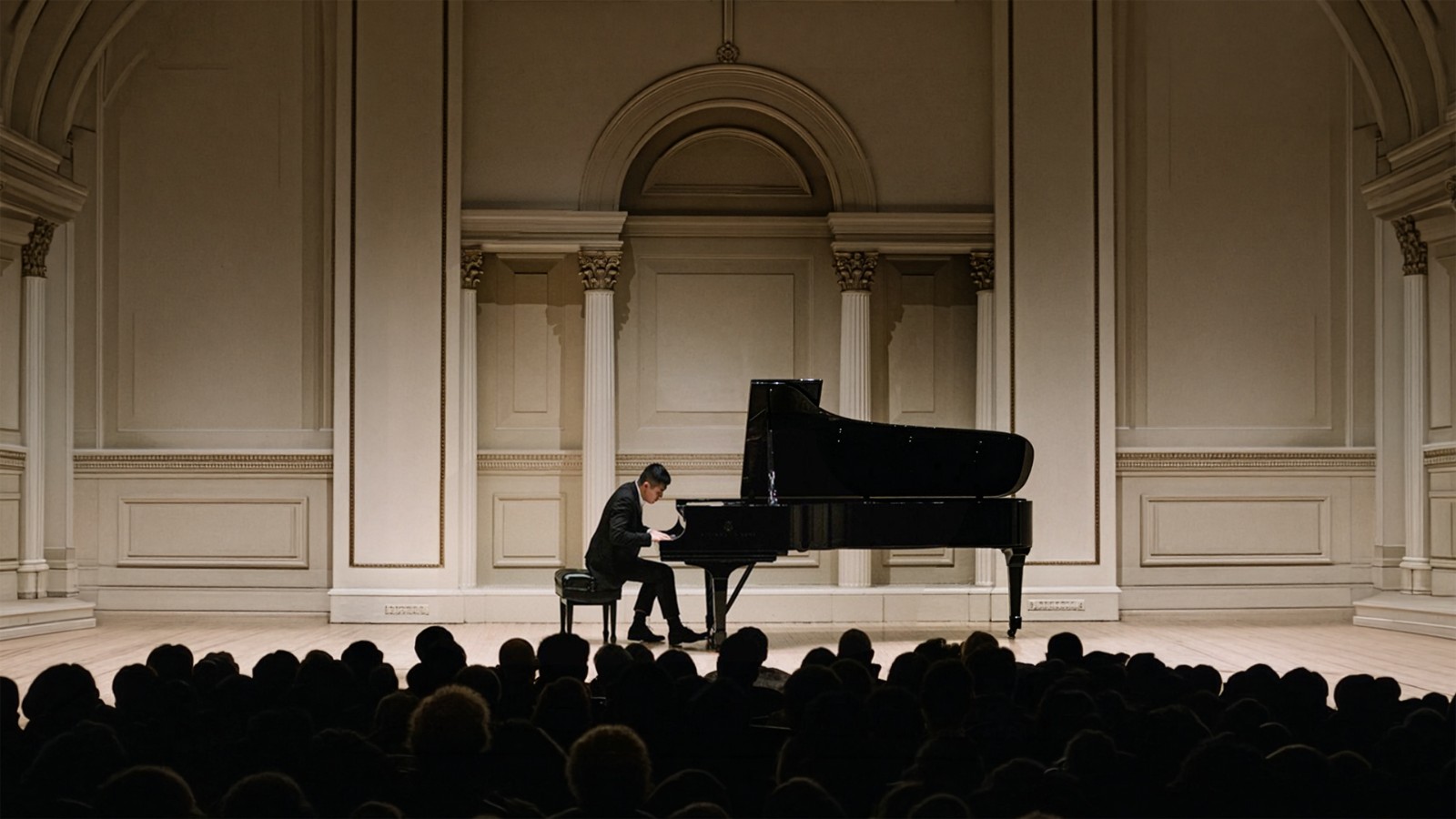
What makes Claudia's experience so compelling is the contrast. Before the DS 6.0, she was dealing with tendonitis, a ganglion cyst, and surgery on her wrist. She was limited to Mozart and lighter repertoire, unable to play the Prokofiev, Liszt, and Brahms pieces she dreamed of performing. After finding the DS 6.0 through Dr. Leone at SMU, she didn't just recover; she transformed. She learned new techniques, expanded her repertoire dramatically, and performed both her junior and senior recitals on the instrument.
Perhaps most telling is her response to the skeptics: those who worry that playing on a narrower keyboard will somehow erase years of technique. "There's no way. They just haven't tried." Claudia regularly switches between standard and DS 6.0 keyboards for chamber performances, auditions, and solo recitals. The adjustment, she says, is trivial.
Her story is an invitation to students, to parents, to teachers, and to the piano world at large: reconsider the assumption that one keyboard size must serve everyone. As Claudia puts it: "We adjust our hands to fit the pianos, but we don't adjust the piano sizes to fit our hands."
For pianists everywhere with smaller hands who wonder whether they can truly pursue a career at the highest level, Claudia's journey is proof that with the right instrument, the only limit is your musicality, not the size of your hands.
Key Takeaways
- Claudia developed tendonitis and required wrist surgery from overstretching on a standard keyboard with a 7.2" hand span
- Since switching to the DS 6.0, she has had zero recurring injuries and can play Prokofiev, Liszt, and Brahms
- Switching between DS 6.0 and standard keyboards requires only "one or two run-throughs" to adjust
- The DS 6.0 teaches better technique: hands stay rounded and relaxed, reducing tension and injury risk
- Female and Asian pianists face a measurable hand-size disadvantage on standard keyboards, particularly in competitions
- Other instruments (violin, cello, brass) come in multiple sizes; piano remains the outlier
- Dr. Leone at SMU has championed alternative keyboard sizes for nearly three decades, inspiring growing adoption across universities