Our Story
My Hands Never Fit the Piano: How DreamPlay Started
My hands are not large, especially for a man, and for about 30 years that quietly shaped everything about how I played. I just did not know it was the hands. I assumed piano was supposed to feel like a finger stretching exercise, and I never questioned it.
The first 30 years
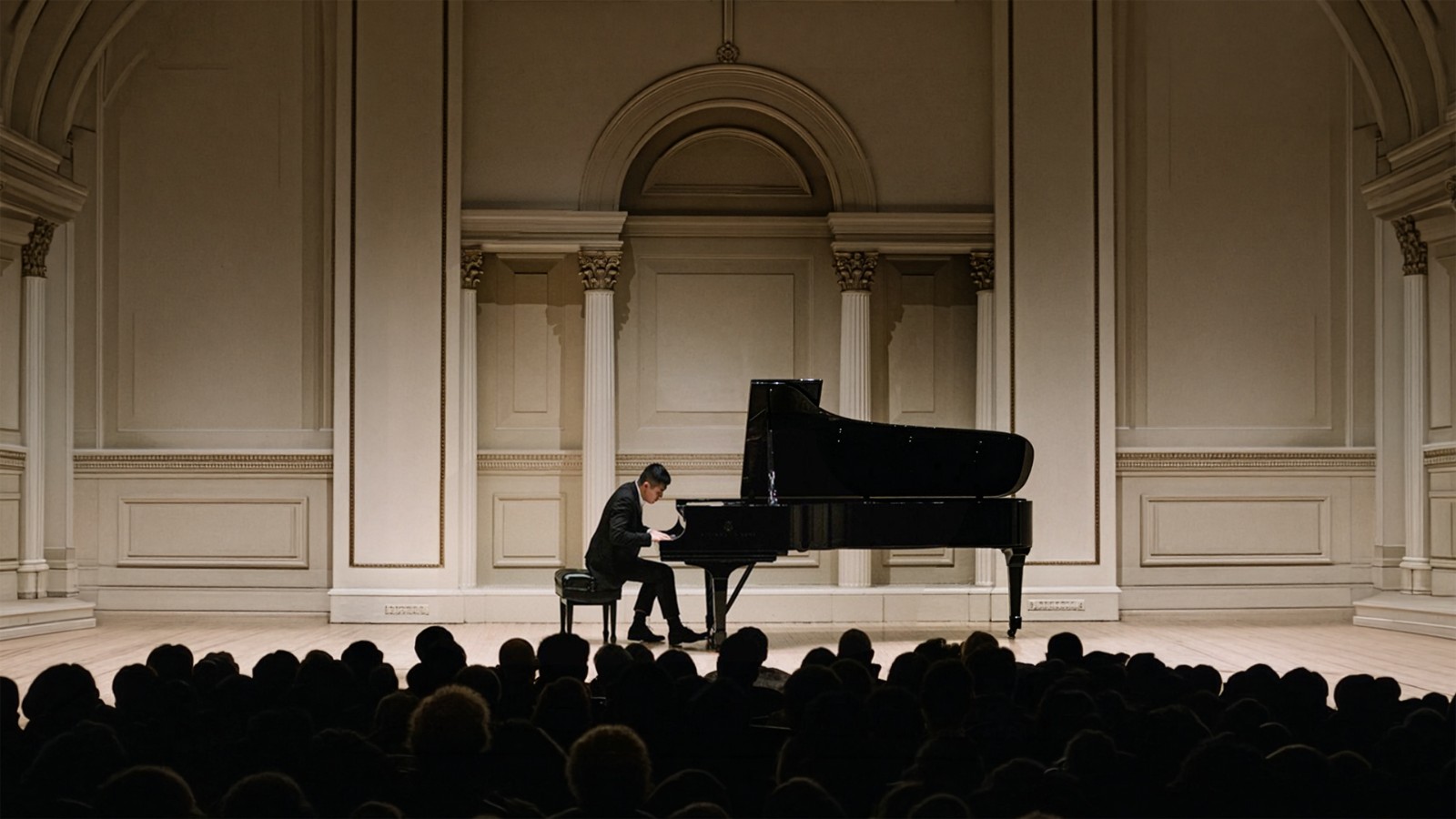
I became a professional pianist late, at 30, and even then I was straining to reach certain notes. Some of my favorite composers were closed off to me, because Liszt and Rachmaninoff both famously had large hands. After a hard practice session I would shake my hands out in pain, and when I played at Carnegie Hall and The Kennedy Center I often had to ignore the strain in my fingers to get the music out. I thought that was simply what serious pianists put up with. I did not know then that the modern piano only reached its current key size around the time of superstars like Liszt and Anton Rubinstein, and that earlier pianos had narrower keys.
A textile factory in Pennsylvania
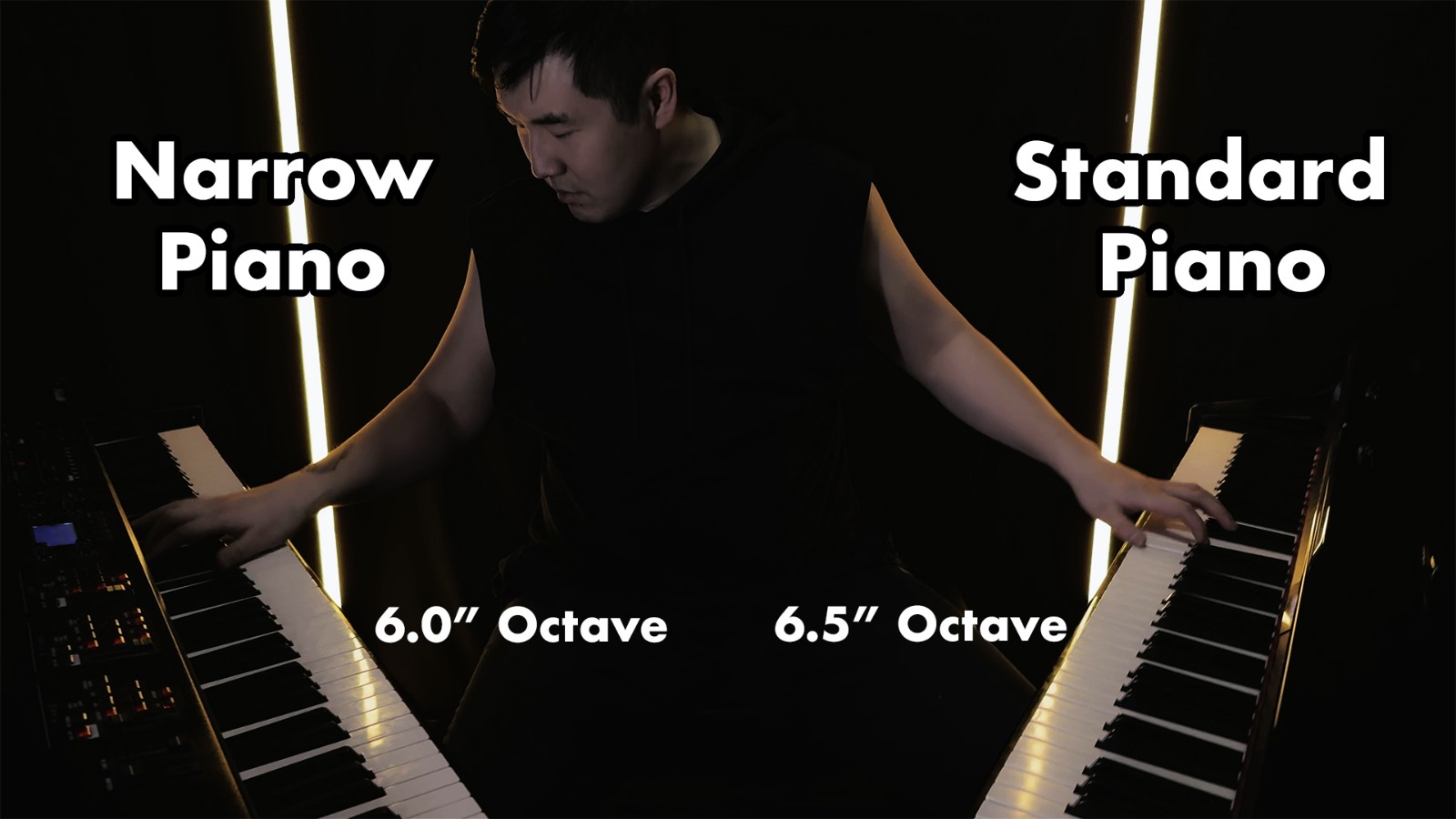
In 2022 I met David Steinbuhler, who owns a textile factory in northern Pennsylvania. In one small corner of it he had an operation making narrower keyboards for pianists all over the world, and together with Christopher Donison he had created the Donison-Steinbuhler (DS) Standard. David took my Kawai MP11SE and replaced its standard keys with a narrower DS6.0 set, a 6.0 inch octave instead of 6.5.
What changed
For the first few weeks I did not notice much, except that the black keys felt so narrow. On a standard piano the black keys give you enough surface to approximate the distance and still hit the note. On the narrower keys my finger accuracy had to be better, and that took getting used to.
Then the unease faded, and what I felt instead was relaxation. For the first time in my life I did not have to strain to play an octave, the most common interval there is. Pieces by Chopin, Liszt and Rachmaninoff started opening up to me, like old friends who had moved back into town.
My students
After my concert tour in 2023 I decided to teach, and I started in late 2024. My students were fans of my YouTube channel, and many of them had been to my concerts.
Almost every student under 13 had trouble with hand size, and I kept saying what teachers say: don't worry, your hands will grow. Teenagers with smaller hands struggled too, and I felt bad demonstrating on my DS6.0, knowing they could not copy it on their standard keys. Most of my adult female students complained about large intervals. Many of the men could play 9ths and 10ths, but the ones with hands like mine had trouble with Romantic repertoire.
When I counted, I came to believe that about 60% of my students would benefit from a narrower keyboard: nearly all of my female students and a quarter of my male students. I badly wanted them to play once on my DS6.0 and feel how easy it was. DreamPlay started from me watching some of my female and younger students lose motivation because their hands simply didn't fit standard keyboards.
Finding a factory
In June 2025 I traveled to Shenzhen, China, and signed the manufacturing contract for the DreamPlay One with Ebulent Technologies Corporation. Finding a factory was one of our highest hurdles. Major piano makers turned the project down, because our first production run was small and the tooling for 15/16 size keys is not standard.
Ebulent is a custom order supplier that builds smart guitars and complex LED displays in house, and they believed in what we were trying to do. With their in-house tooling stations we were able to cast the custom steel molds that our narrow keys need.
That is the story so far. We simply want 2 more sizes, the DS5.5 and the DS6.0, so that a keyboard can fit your hands. That's it.
Lionel
P.S. The full timeline, with the people and the places, is on our Our Story page.
Read the full story
The whole timeline, from the early years to the factory visit in 2025, is on our Our Story page.